
Start with the scale of the region
Puglia is long enough that one base will not suit every place you might want to visit. Bari and the nearby Adriatic towns form one useful cluster. The Valle d’Itria, with places such as Locorotondo and Martina Franca, offers another. Lecce and the Salento belong further south and deserve their own time. Choose one area for a short stay, or split a longer trip between two bases. The mistake is assuming every white town on a saved-photo list sits just around the corner. A few coherent days in one area will usually feel better than repeatedly crossing the region.
Towns with different characters
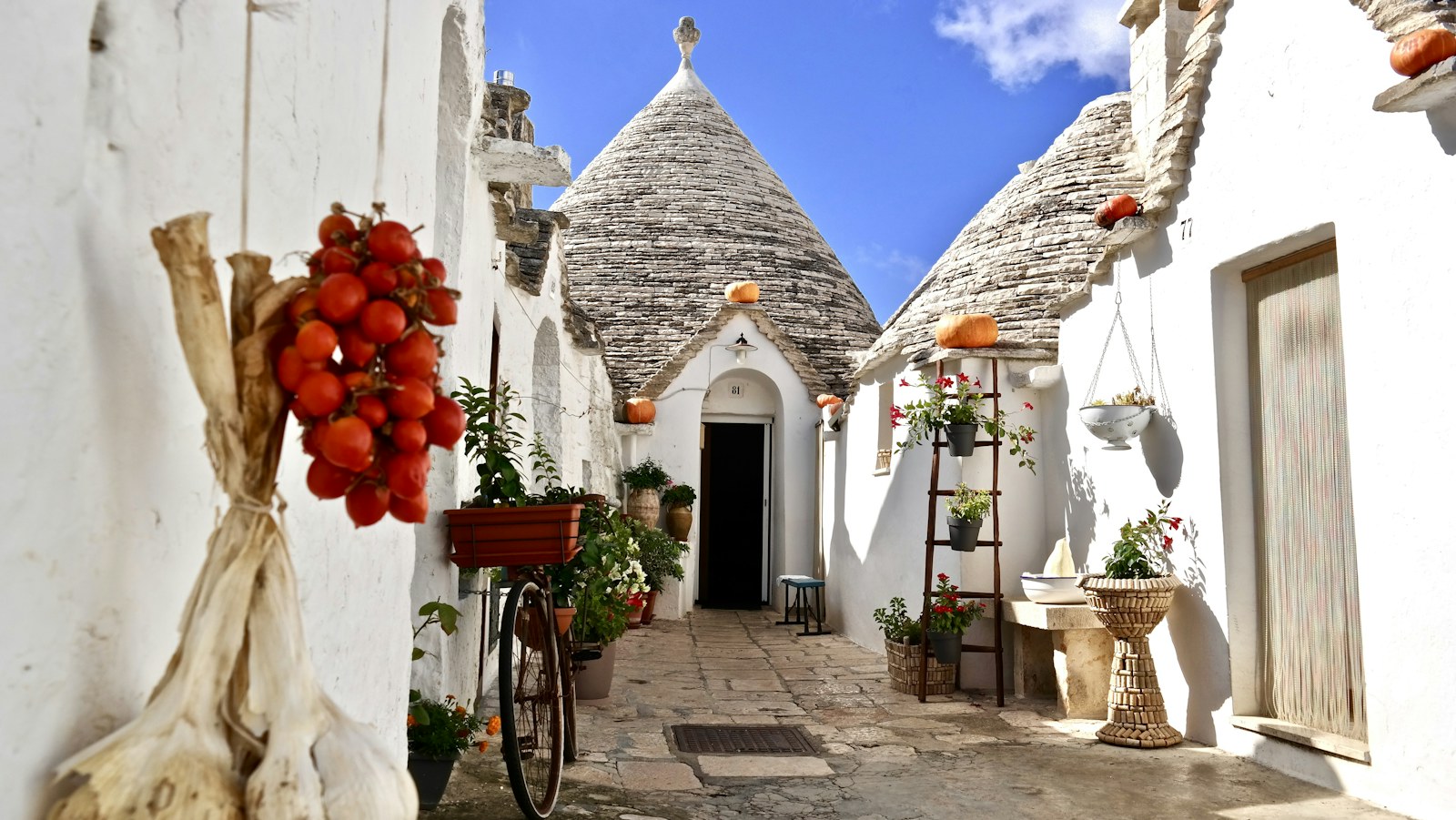
Bari Vecchia combines narrow lanes with the everyday life of a larger city. Polignano a Mare is strongly associated with its dramatic coastal setting, while Monopoli makes a useful comparison with its harbour and old town. Inland, Alberobello’s trulli are distinctive, but the town is more rewarding when you give the streets time beyond the busiest photographs. Locorotondo offers a different scale, and Martina Franca adds baroque architecture to a Valle d’Itria route. Further south, Lecce has a substantial historic centre of its own. Do not reduce these places to interchangeable backdrops: choose the ones that match your interests.
Where to stay, and why it matters
A town base gives you the freedom to walk to dinner and explore after day visitors leave. A masseria can offer a rural setting, but it often changes your reliance on a car. Ask about meal service, the distance to shops, and the road into the property. For a coastal stay, check whether you want immediate swimming access or a historic centre near the sea; the two are not always the same thing. Bari suits a rail-oriented visit to nearby coastal towns. Lecce can work for a southern focus. For the Valle d’Itria, choose a base around the places you intend to visit rather than the broad regional label.
Food is a good reason to slow down
Orecchiette, vegetables, pulses, olive oil, and bread are useful starting points for understanding Puglian food. Focaccia barese makes a practical snack in Bari; in Lecce, a pasticciotto offers a different kind of pause. Look for local specialities where you are rather than expecting one menu across the entire region. Burrata and other fresh cheeses deserve careful storage if you buy them for a picnic. A long lunch can be the main event of a rural day, but check opening arrangements instead of assuming every restaurant serves continuously. Choose a few meals thoughtfully and leave others simple.
Rail routes and rural gaps
Bari and Brindisi are important gateways, but choose between them according to your actual route and available transport. Trains connect several coastal destinations and larger towns. Inland connections can require different operators or less frequent services, so research them before deciding a car is unnecessary. A rental car can help with a rural stay, though historic centres may have restrictions and parking outside the old town. Get written arrival advice from your accommodation. Do not measure a day only by driving time: finding parking, walking into town, and returning to the car all use part of the afternoon.
A Valle d’Itria day
Start in Locorotondo while you have the energy to wander, then make lunch the natural break rather than immediately driving to the next town. Choose Martina Franca or Alberobello for the afternoon, depending on your interests and where you are staying. Leave the other for another day. If a farm visit or cooking activity is important, substitute it for a town rather than adding it on top. Return to your base before dinner and enjoy the advantage of unpacking once. A coastal day should have its own plan, particularly when swimming conditions or seasonal facilities matter to the people travelling with you.
What to check before paying
Confirm whether a pool, restaurant, or beach service operates during your dates. Rural quiet in the evening can be appealing, but it is inconvenient if you have no transport and no meal options. In summer, coastal demand and heat change the rhythm of the day; earlier walks and a midday break are sensible. Outside the busiest season, reduced services can matter more than crowds. Check each leg of a public transport itinerary directly with the operator. Puglia works particularly well when you allow a little repetition: returning to the same bakery or square can tell you more than one additional hurried town visit.
Puglia: your questions
Do I need two bases?
For a week combining the Valle d’Itria and the Salento, two bases can reduce repeated long journeys. For a shorter visit, choose one area.
Is Puglia possible by public transport?
Yes for selected town routes. Research the exact operators and final connections before booking rural accommodation.