
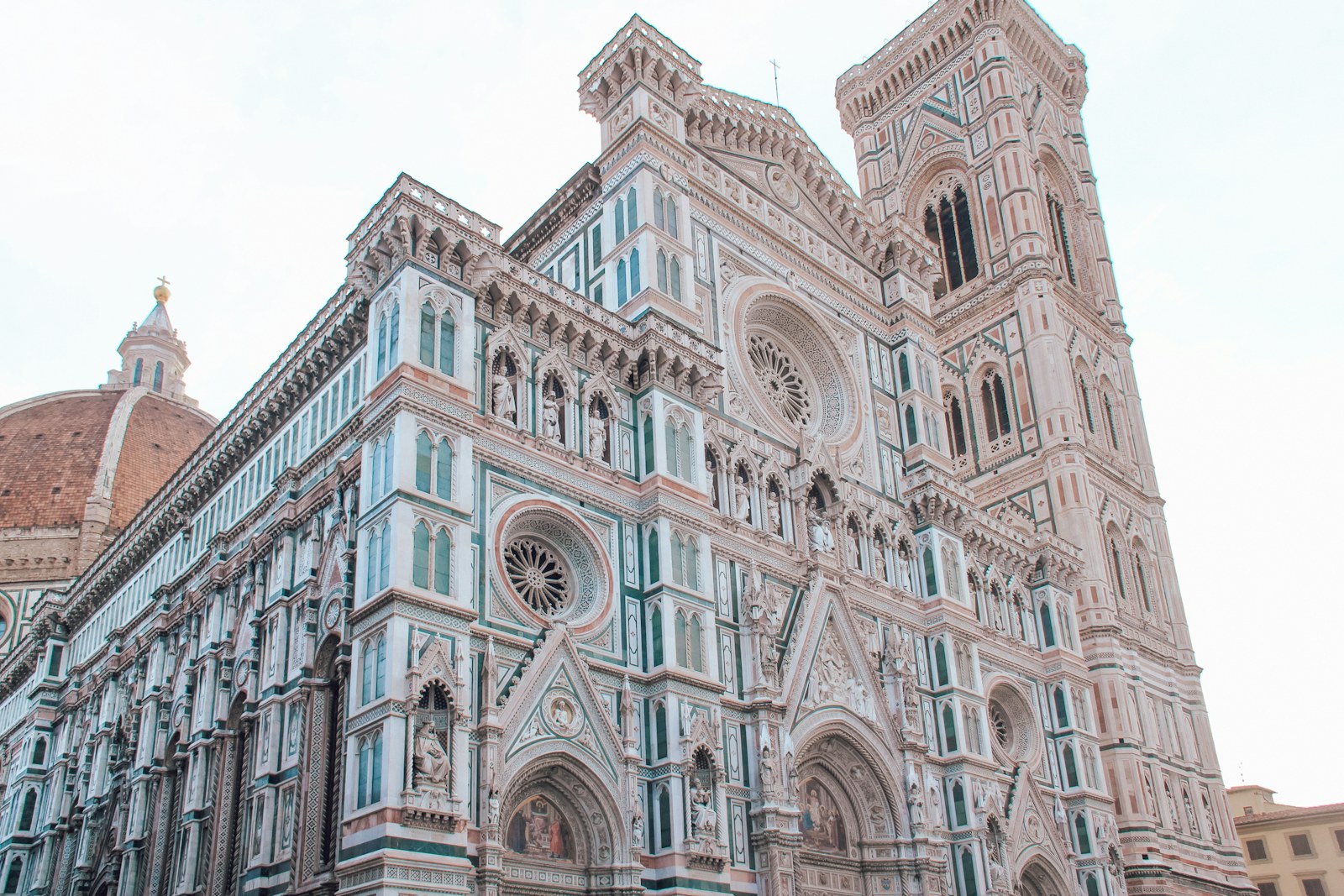
A small city with a deep collection
The historic centre of Florence can look deceptively manageable on a map. The Duomo, Uffizi, and Ponte Vecchio sit close together, yet each belongs to a much larger story of patronage, craft, and trade. Treat proximity as an opportunity to slow down rather than a reason to book everything. One major museum per day is enough for many visitors. Leave another part of the day for a walk across the Arno, a small church, or a neighbourhood café. Staying overnight also lets you experience the streets before the day-trip crowds arrive and after they disperse.
Choose your art deliberately
The Uffizi suits visitors interested in painting and the development of Renaissance art. The Accademia is a different, more focused experience, strongly associated with Michelangelo’s David. Decide which matters most before allocating your days. Read official ticket information carefully, because combined passes, timed entries, and individual parts of the cathedral complex are not interchangeable. For a quieter interval, spend time around Santa Croce or look into a smaller collection that fits your interests. Do not use a museum merely as a box to tick. A shorter visit with a few works you understand can be more rewarding than an exhausted march through every room.
Across the Arno
The Oltrarno changes the rhythm of the visit. Around Santo Spirito and San Frediano, you can connect squares, workshops, and small shops without the constant pull of the Duomo. Keep in mind that these are working neighbourhoods, with deliveries, residents, and ordinary routines. Browse respectfully and ask before photographing inside a workshop. For a viewpoint, the climb towards Piazzale Michelangelo is a separate outing rather than a quick flat walk. Go when you have energy, carry water in warm weather, and do not assume the descent will be effortless for everyone in your group.
Where to base yourself
Stay near Santa Maria Novella if an easy station arrival is a priority, but look at the exact street and recent noise comments. The Duomo area places you in the middle of things, often with correspondingly busy surroundings. Santa Croce can suit visitors who want dining choices and an active evening atmosphere. Oltrarno is appealing if you prefer to cross the river for major sights and return to a more residential setting. With luggage, a beautiful upper-floor room without a lift may be less appealing on arrival than in photographs. Ask about stairs, cooling, and the route from your transport stop before paying.
At the Tuscan table
Florentine eating is not only about a large steak. Look for ribollita, pappa al pomodoro, beans, seasonal vegetables, and regional pasta dishes. A sandwich makes a practical lunch between visits; a seated meal offers a chance to rest. Bistecca alla fiorentina is often intended for sharing and commonly priced by weight, so clarify the size and total cost before ordering. Market buildings can be useful for browsing ingredients, though a busy food hall and a traditional market stall are different experiences. Choose according to your mood rather than assuming that every market setting guarantees a quiet local lunch.
Getting here and choosing day trips
Florence works well as a rail base, especially when the rest of your route includes Rome or Venice. Check the exact station on your ticket; not every service uses the same arrival point. Within the historic centre, walking is usually the simplest way to connect nearby places. For countryside villages, a map alone does not reveal the frequency of public transport. Siena or a single organised rural excursion may be easier than trying to string together several hill towns independently in one day. If the countryside is central to the trip, allocate nights there instead of commuting out of Florence every morning.
A balanced Florence day
Begin with your main museum reservation, then take lunch nearby with time to sit. Cross the river in the afternoon and explore Santo Spirito at a slower pace. Leave the viewpoint optional, especially if the temperature is high or your morning involved several hours standing. Have dinner near your accommodation rather than returning across town for one more recommendation. On a separate day, focus on the cathedral area and a smaller collection. Common mistakes are doubling up major museums, underestimating queues, and booking a rural excursion on the only full day available. Florence becomes more legible when you leave space between its celebrated works.
Florence: your questions
Is Florence a good countryside base?
Yes for a selected day trip. For several small villages or rural meals, split the stay and spend some nights in Tuscany itself.
Should I book the main museums?
Check availability with the official museums before fixing the rest of your sightseeing days.