
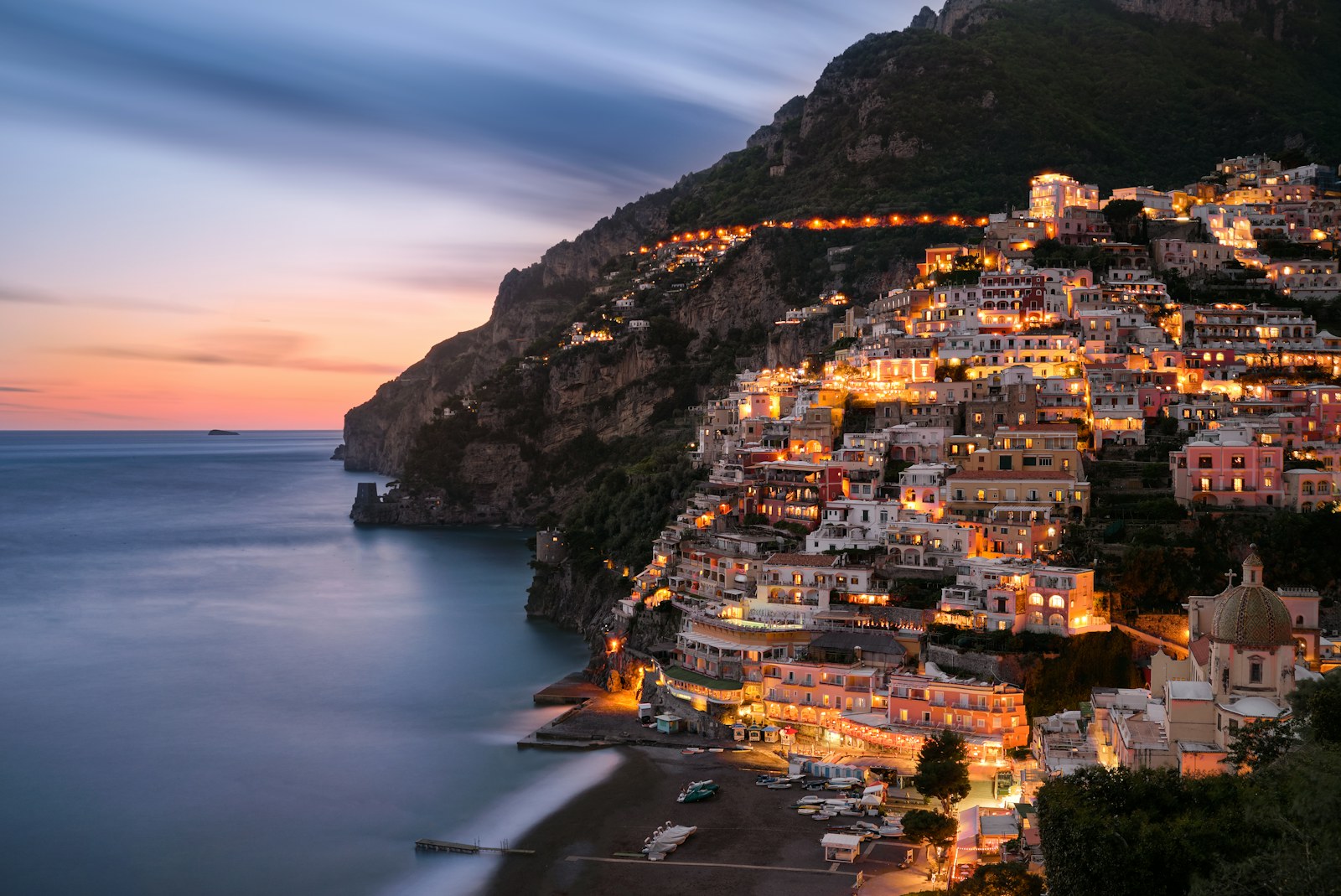
Understand the shape of the coast
The Amalfi Coast is a chain of towns connected by winding roads, footpaths, and seasonal sea services. It is not a flat beach strip with effortless transfers. Positano’s vertical streets, Amalfi’s central connections, and Ravello’s elevated setting create quite different stays. Pick your base according to how you want to spend your days, not only the view from a balcony. Three nights can work for a short visit to one part of the coast; four give more flexibility if weather or transport changes a plan. An arrival afternoon should not carry the same expectations as a full sightseeing day.
Choose two towns, then pause
Amalfi and nearby Atrani can make a satisfying day without crossing the whole coastline. Explore their streets, take time for lunch, and leave a waterfront pause in the schedule. Ravello is inland and uphill from the sea; it suits gardens and views rather than spontaneous swimming. Positano offers a distinctive hillside setting, but its stairs require a realistic assessment of your group’s mobility. You do not need to visit every named town. If each day becomes a sequence of queues and transfers, the itinerary is working against the reason you came. A free afternoon can be the most valuable part of the trip.
Where to stay: read the steps
Amalfi can suit visitors who value transport connections and a comparatively straightforward central area. Positano appeals for its setting, though the address and number of steps matter greatly. Ravello offers a different atmosphere above the coast, with extra travel when you want to reach the water. Smaller towns may be calmer but require closer attention to meal options and transport frequency. Ask your host for a precise arrival route, including any staircases. A short map distance from the road or pier does not guarantee an easy walk with luggage. If access is important, obtain specific details rather than relying on the word convenient.
At the table and by the water
Expect coastal menus to draw on fish, seafood, citrus, and vegetables, though the exact dishes and prices vary considerably. Ask about the day’s catch and how it is priced before ordering. A lemon dessert makes a fine finish without turning every meal into a tasting event. Beach arrangements differ between locations; some areas have paid facilities while others offer public access. Check local information and conditions on arrival. Keep a relaxed lunch separate from a tight boat departure. A table with a sea view is enjoyable only when you are not watching the time throughout the meal.
Getting there takes a sequence
Many journeys begin through Naples or Salerno, followed by an onward connection. Choose your gateway around the base and actual available services. There is no railway running along the Amalfi Coast itself. Boats can be attractive when operating, but weather and season affect them. Buses serve important routes, yet traffic and crowds can complicate timings. Driving is not automatically the easiest option: narrow roads, parking, and local restrictions need research. Check current arrangements with official operators and your accommodation before committing. Avoid a final departure that depends on an optimistic chain of tightly spaced connections.
A day that respects the terrain
Have a slow breakfast in Amalfi, then spend the morning exploring its centre and walking towards Atrani if the route and conditions suit you. Stop for lunch and choose between an afternoon visit to Ravello or time by the water. Make the choice based on energy and transport, not a need to complete the map. A longer hike, such as a section of the Path of the Gods, should be a separate planned activity with suitable footwear, weather checks, and a realistic return route. Do not attach a demanding walk to an already full sightseeing day simply because the photographs look inviting.
Common coastal planning mistakes
Overpacking, moving hotels frequently, and assuming every boat runs year-round can all make the visit harder. Another mistake is using the coast as a quick add-on between two distant cities with barely enough time to arrive. Confirm transport for your dates and keep a land-based alternative for a cancelled sea journey. In hot weather, carry water and avoid ambitious exposed walks at midday. If your party has limited mobility, discuss the actual stairs and boarding arrangements before booking. The coast is more enjoyable when the itinerary accepts its geography. Leave one main activity per day and let the rest remain flexible.
Amalfi Coast: your questions
Can I reach the coast by train?
Trains serve gateways such as Salerno, but the coastal towns require a further connection. Plan the whole journey to your accommodation.
Is a hire car essential?
No. Depending on your dates and base, buses, boats, and transfers may be more practical. Check current services before deciding.